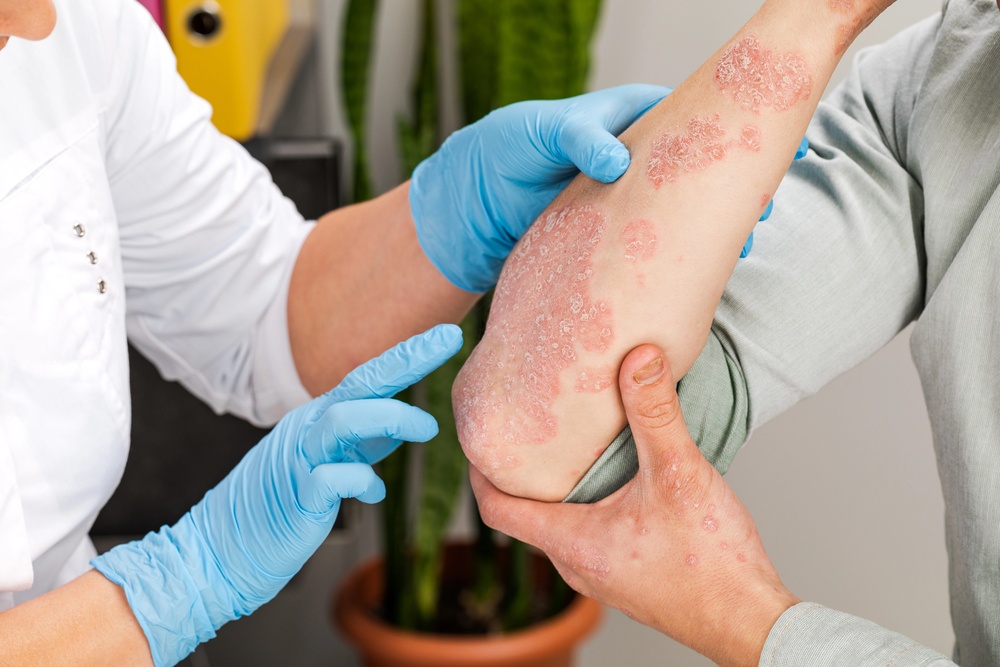
Psoriatic arthritis (PsA) is a chronic autoimmune disease that affects both the joints and the skin. It develops in some individuals who have psoriasis and can cause joint inflammation, stiffness, swelling, and progressive damage over time. The condition can affect fingers, toes, knees, spine, and other joints, making daily movement painful and limiting mobility.
Current treatments aim to control inflammation and slow disease progression. Medications such as nonsteroidal anti-inflammatory drugs (NSAIDs), disease-modifying antirheumatic drugs (DMARDs), and biologic therapies are commonly used to manage symptoms. While these treatments can be effective for many patients, some individuals continue to experience persistent inflammation or side effects from long-term medication use.
Because of these challenges, researchers have been exploring regenerative medicine approaches, including stem cell therapy, to better understand how the immune system and damaged tissues might be supported. Studies investigating stem cells for inflammatory and autoimmune diseases have generated growing scientific interest. This article examines what research currently shows about stem cell therapy for psoriatic arthritis, including clinical evidence and safety considerations.
What Is Psoriatic Arthritis and How Does It Affect the Body?
Psoriatic arthritis occurs when the immune system mistakenly attacks healthy tissues, particularly in the joints and skin. This immune response triggers inflammation that can damage cartilage, bone, and surrounding tissues. Symptoms may include joint pain, swelling, stiffness, fatigue, and reduced range of motion.
The condition often appears in people who already have psoriasis, a chronic inflammatory skin disease characterized by red, scaly patches. The immune pathways involved in psoriasis and psoriatic arthritis are closely related, which explains why the two conditions frequently occur together.
Inflammation plays a central role in both diseases. Certain immune cells release inflammatory molecules such as tumor necrosis factor-alpha (TNF-α) and interleukins, which contribute to joint swelling and skin lesions. Treatments often target these pathways in an attempt to reduce immune overactivity and protect the joints from damage.
For individuals seeking more information about managing psoriasis and related inflammatory conditions, educational resources such as this guide on psoriasis treatment relief provide helpful insight into how the condition develops, common symptoms, and the range of treatment options that may be discussed with healthcare professionals. These types of resources can also explain how inflammation affects the skin and joints, how psoriasis may be linked to conditions like psoriatic arthritis, and what lifestyle or medical strategies may help support symptom management and overall quality of life.
What Is Stem Cell Therapy and Why Are Researchers Studying It for Psoriatic Arthritis?
Stem cells are specialized cells capable of developing into many different types of cells in the body. They also release signaling molecules and growth factors that may influence inflammation, immune activity, and tissue repair.
One type that has received significant attention in research is the mesenchymal stem cell (MSC). These cells can be derived from bone marrow, adipose tissue, and other biological sources. Scientists study MSCs because they appear to have immunomodulatory and anti-inflammatory properties.
Research suggests that mesenchymal stem cells may interact with immune cells and help regulate inflammatory responses in autoimmune diseases. They may also release molecules that support tissue repair and healing in joints affected by chronic inflammation.
Because psoriatic arthritis involves both immune system dysregulation and tissue damage, stem cells have become an area of interest for researchers investigating potential regenerative strategies.
What Does Current Clinical Research Say About Stem Cells and Psoriatic Arthritis?
Clinical research examining stem cells for psoriatic arthritis remains limited, but early studies and related research in inflammatory arthritis provide valuable insights.
Research exploring mesenchymal stem cell therapies in inflammatory arthritis conditions has reported improvements in pain levels and joint function in some patients. Some clinical analyses have shown that stem cell-based therapies may help reduce inflammatory activity and improve physical function while maintaining a generally favorable safety profile.
In certain case studies, patients with severe psoriatic arthritis experienced improvements in joint pain, mobility, and skin symptoms after receiving experimental stem cell treatments during monitored research programs.
Researchers are also studying how stem cells may influence psoriasis itself. Experimental and clinical studies suggest that mesenchymal stem cells may help regulate inflammatory pathways involved in psoriasis, which could potentially reduce skin lesion severity.
However, experts emphasize that most research studies are still small or early-stage trials. Larger randomized studies are needed to confirm effectiveness and understand long-term outcomes.
What Do Safety Studies Reveal About Stem Cell Therapy?
Safety remains one of the most important areas of investigation in regenerative medicine research. Clinical studies evaluating stem cell therapies for autoimmune diseases have generally reported encouraging safety profiles when conducted in controlled research environments.
In many studies, serious complications such as severe infections, organ toxicity, or malignancies have not been commonly reported. The most frequently described side effects are mild and temporary. These may include fatigue, low-grade fever, or localized discomfort after the procedure.
Researchers continue to monitor patients in long-term clinical studies to understand the safety profile of stem cell therapies. Because different cell sources, preparation methods, and delivery techniques can influence outcomes, ongoing clinical research is essential.
For these reasons, stem cell therapy remains an area of active scientific investigation rather than a widely established treatment for psoriatic arthritis.
How Could Regenerative Medicine Shape the Future of Autoimmune Disease Care?
Stem cell research represents an evolving field within regenerative medicine. Scientists are studying how these cells communicate with the immune system and how they may influence inflammation in autoimmune diseases.
One major area of research focuses on the molecules that stem cells release. These molecules may influence immune cells, potentially reducing inflammatory cytokines and promoting immune balance. Researchers are also exploring whether stem cells may support the repair of cartilage or joint tissues damaged by chronic inflammation.
While these discoveries remain under investigation, regenerative medicine research continues to expand understanding of autoimmune conditions and may contribute to future therapeutic developments.
FAQs
- Is stem cell therapy currently approved for psoriatic arthritis?
Most stem cell therapies for psoriatic arthritis are still experimental and are being studied in clinical trials. - How might stem cells help autoimmune arthritis?
Research suggests stem cells may influence immune responses, reduce inflammatory activity, and support tissue repair. - Can stem cell therapy cure psoriatic arthritis?
There is currently no cure for psoriatic arthritis. Stem cell therapies are being researched as potential supportive approaches, but remain under investigation. - Are there risks involved?
Clinical studies generally report mild side effects in controlled settings, although long-term safety continues to be evaluated through ongoing research. - Why is additional research needed?
Large clinical trials are necessary to confirm effectiveness, determine optimal treatment methods, and identify which patients may benefit most.
Learn More About Advances in Regenerative Medicine with Cellebration Wellness
Scientific research into stem cells continues to expand our understanding of autoimmune diseases and inflammatory conditions such as psoriatic arthritis. As studies progress, researchers are learning more about how regenerative medicine may influence immune regulation and tissue repair.
Cellebration Wellness focuses on wellness and regenerative approaches inspired by the latest advances in stem cell research. Educational resources about emerging regenerative science can help individuals better understand current developments and potential future therapies.
To learn more about regenerative health education and current developments in stem cell research, contact Cellebration Wellness at (858) 258-5090.