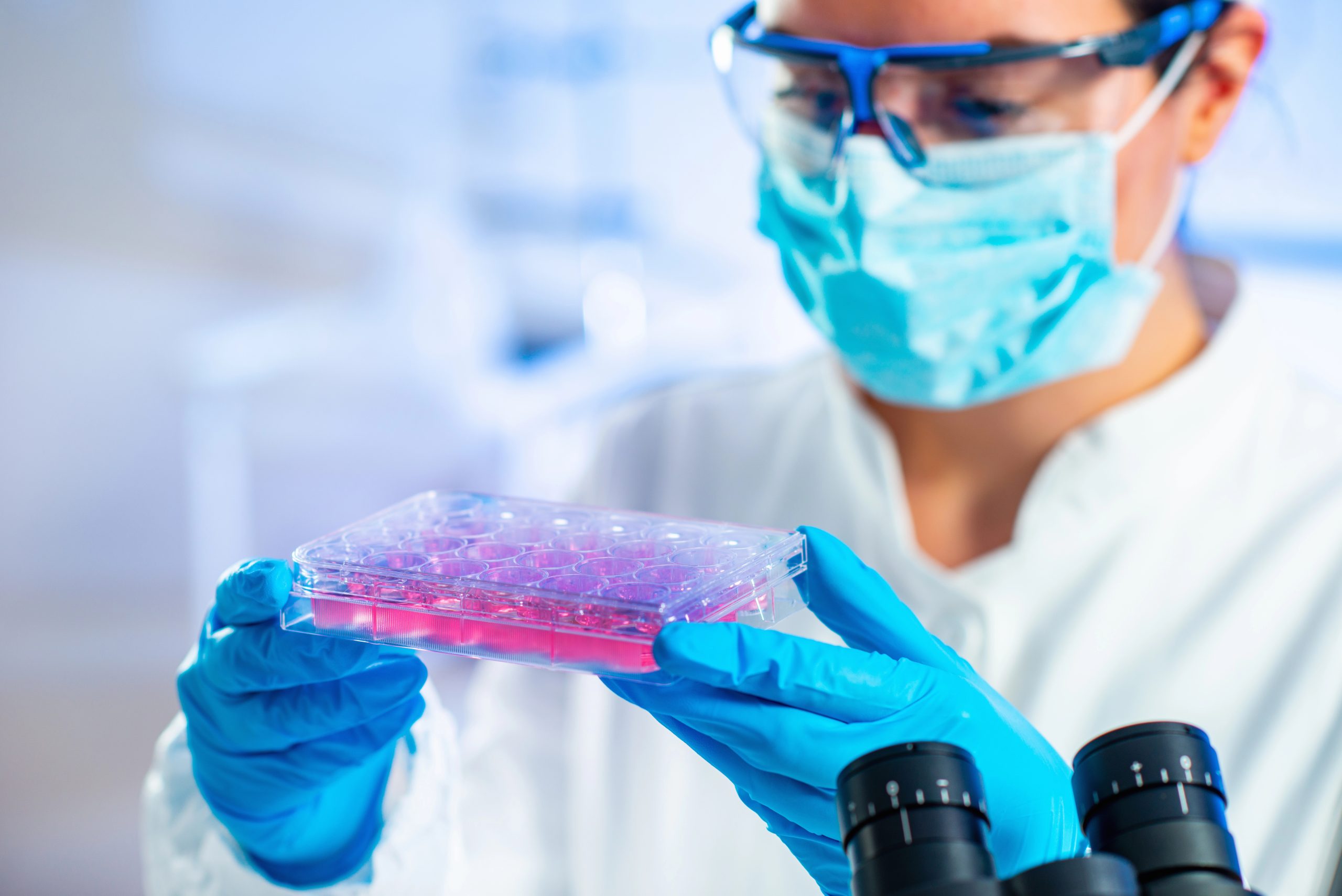
Regenerative medicine rarely works in isolation. The most effective clinical protocols are not built around a single tool but around a strategic combination of tools, each addressing a different dimension of the biological problem, each amplifying the effect of the others. Nowhere is this principle more clearly demonstrated than in the combination of Platelet-Rich Plasma and Mesenchymal Stem Cell therapy.
Used individually, both PRP and stem cell therapy represent meaningful advances over conventional treatment for musculoskeletal conditions, chronic joint disease, and soft tissue injuries. Used together, they operate as a coordinated biological system, one that addresses tissue repair at multiple levels simultaneously and produces outcomes that neither therapy reliably achieves alone.
What Each Therapy Brings to the Table
Understanding why the combination works requires understanding what each component contributes independently.
Platelet-Rich Plasma is derived from the patient's own blood. A small sample is drawn, processed in a centrifuge to concentrate the platelets, and the resulting preparation rich in growth factors including PDGF, TGF-β, VEGF, and IGF-1, is injected into the target tissue. PRP does not introduce new cells into the repair environment. What it introduces is a concentrated signaling payload: growth factors that activate resident repair cells, stimulate collagen synthesis, promote angiogenesis, and create a biochemical environment that is more receptive to healing.
PRP's primary limitation is also clear from this description. It amplifies the signals that drive repair, but it depends on the presence of viable, responsive cells in the target tissue to act on those signals. In tissue that is significantly degenerated, depleted of functional chondrocytes or tenocytes, or chronically inflamed to the point where resident cells are no longer responsive, PRP's growth factor payload has diminishing returns. The signal is present; the receivers are compromised.
Mesenchymal Stem Cells address precisely this limitation. MSCs introduce a population of biologically active cells that can respond to the tissue environment, differentiate toward tissue-specific cell types, release their own anti-inflammatory and regenerative secretome, and serve as the functional repair cells that PRP's growth factors are designed to activate. Where PRP provides the signal, MSCs provide both the response and the amplification.
The biological synergy between these two therapies is not theoretical. It is well-documented in clinical research. Studies examining adipose-derived stem cells combined with PRP have shown that PRP functions as an effective scaffold and activation medium for transplanted stem cells, improving their proliferation, survival, and differentiation capacity in the target tissue. In practical terms, PRP prepares the biological environment for MSC activity, and MSCs provide the cellular infrastructure that makes PRP's growth factor signaling maximally effective.
The Synergy in Practice: What Combination Therapy Does That Monotherapy Cannot
The argument for combination therapy is not simply additive, it is multiplicative. The two therapies interact in ways that produce biological effects neither achieves independently.
- Stem cell activation and survival. One of the persistent challenges in cell-based therapy is ensuring that introduced MSCs survive and remain active long enough in the target tissue to produce a meaningful biological effect. PRP's growth factor environment (particularly its PDGF and IGF-1 content) has been shown to significantly improve MSC viability and proliferative activity following injection. The cells introduced by stem cell therapy are, in effect, placed into a more favorable biological context by the concurrent presence of PRP.
- Accelerated collagen remodeling. Both PRP and MSCs independently stimulate collagen synthesis in damaged tendon and cartilage, but through different upstream mechanisms. PRP activates resident tenocytes and chondrocytes via direct growth factor binding. MSCs upregulate collagen production through paracrine signaling and direct differentiation. When both mechanisms operate simultaneously, the collagen synthesis response is broader, more sustained, and produces structurally superior tissue compared to either therapy alone. Studies comparing combination therapy to PRP monotherapy in Achilles tendon injuries have demonstrated statistically higher collagen production and greater tendon strength in the combination group.
- Sustained anti-inflammatory effect. PRP provides an initial, concentrated burst of anti-inflammatory growth factor activity. MSCs deliver a sustained, adaptive anti-inflammatory response that continues as long as the cells remain viable in the tissue, responding dynamically to the ongoing inflammatory environment. Together, they address both the acute and chronic dimensions of tissue inflammation: PRP resets the initial biochemical environment, and MSCs maintain the recalibrated state over time.
- Angiogenic support. New blood vessel formation is critical for delivering the ongoing nutrient supply that tissue repair depends on. Both PRP and MSCs upregulate VEGF, but again through different pathways and on different timescales. Their combined angiogenic effect produces a more robust vascular network in the repair zone, supporting more complete and durable tissue restoration.
Clinical Applications Where the Combination Is Most Compelling
The combination of PRP and MSC therapy is not universally indicated, but there are specific clinical scenarios where the evidence for combination over monotherapy is most compelling.
- Osteoarthritis of the knee, hip, and shoulder is the most extensively studied application. Patients with moderate cartilage loss and ongoing synovial inflammation are precisely the population where PRP's environment-priming effect, combined with MSC-driven chondrogenesis and sustained immunomodulation, produces the most durable outcomes. For patients whose disease has progressed beyond what PRP monotherapy reliably addresses, MSC therapy elevates the biological ceiling of what is achievable. As outlined in our resource on PRP and stem cell therapy as a powerful healing combination, the goal is to treat the tissue environment comprehensively, not targeting a single aspect of repair.
- Chronic tendinopathy. Achilles, patellar, and rotator cuff pathology that has failed conservative management is a strong indication. The degenerated tendon environment, characterized by disorganized collagen and a depleted resident cell population, benefits from the full-spectrum biological input that PRP plus MSCs provides.
- Post-surgical recovery. Patients recovering from joint procedures or tendon repair who want to optimize healing quality by reducing fibrotic scar, improving collagen organization, and accelerating functional restoration are well-positioned for combination protocols in the perioperative window.
Is Combination Therapy Right for You?
The decision to use PRP and stem cell therapy in combination depends on condition, disease stage, prior treatment history, and clinical goals. For patients with moderate to advanced tissue degeneration, chronic inflammatory joint disease, or soft tissue injuries that have failed conventional management, the combination approach offers a biologically comprehensive solution that monotherapy cannot match.
If you want to find out whether combination PRP and stem cell therapy is right for your condition, contact Cellebration Wellness today at 858-258-5090 to schedule a consultation or get in touch with us online.