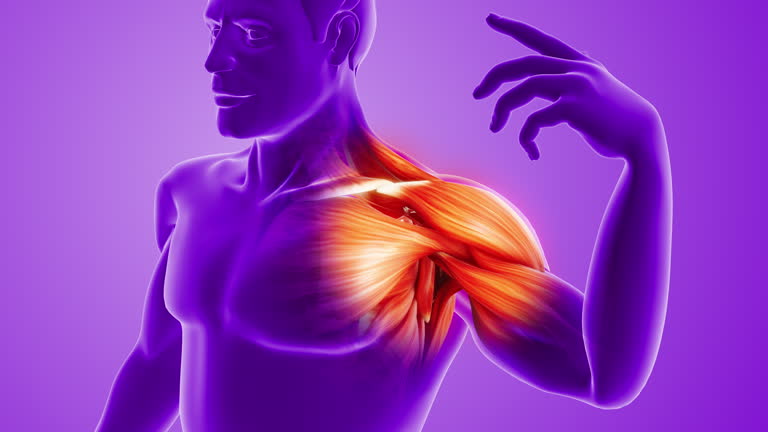
The rotator cuff is one of the most frequently injured and most surgically treated structures in the human body. Yet outcomes following surgical repair are, by the field's own admission, inconsistent. Re-tear rates range from twenty to ninety percent, depending on tear size and patient age, and many patients are left with tissue that is structurally compromised and biologically vulnerable to further failure.
This is the context in which regenerative injections are gaining serious clinical traction, not as a fringe alternative, but as a biologically coherent intervention that addresses what surgery cannot: the tissue-level environment in which healing either succeeds or fails.
Why Rotator Cuff Tissue Is Hard to Heal
The rotator cuff is composed of four muscle-tendon units known as the supraspinatus, infraspinatus, teres minor, and subscapularis, which collectively stabilize the shoulder joint and power its remarkable range of motion. When one or more of these tendons tears, either through acute trauma or the cumulative degeneration of chronic overuse, the resulting injury sits in one of the most biologically hostile repair environments in the musculoskeletal system.
Tendon tissue is largely avascular, meaning that it has minimal blood supply and therefore minimal access to the circulating repair cells that other tissues rely on for healing. When a rotator cuff tear occurs, the body's repair response is slow, incomplete, and frequently results in the deposition of fibrocartilaginous scar tissue rather than the organized, load-bearing Type I collagen of healthy tendon.
This biological limitation is not unique to the shoulder; it is the same avascular constraint that makes tendon pathology so resistant to conventional treatment across the musculoskeletal system, a dynamic we examine in depth in our guide to choosing the right stem cell therapy for your needs. This is why partial tears that go untreated tend to propagate, and why surgically repaired tendons, even when technically successful, lack the biological quality of the original tissue.
The biological failure of conventional repair is precisely where regenerative injections enter the clinical picture.
What Regenerative Injections Do to Rotator Cuff Tissue
MSC injections into a torn or degenerated rotator cuff don't simply reduce pain; they engage the tissue biology directly, targeting the specific mechanisms that make rotator cuff healing so difficult.
- Collagen synthesis and tendon remodeling. MSCs release growth factors, including TGF-β, bFGF, and IGF-1, that stimulate resident tenocytes to produce better-organized collagen: the structured, parallel fiber arrangement that gives healthy tendon its tensile strength. MSC-treated rotator cuff tissue shows measurably improved collagen architecture compared to untreated controls.
- Anti-inflammatory cytokine modulation. The degenerating tendon environment is driven by elevated IL-1β and TNF-α, which suppress healthy matrix synthesis and accelerate tissue breakdown. MSCs counter this by upregulating IL-10 and IL-1 receptor antagonist, shifting the local biology from chronic destruction toward active repair.
- Neovascularization normalization. Chronically degenerated tendons develop pathological blood vessel ingrowth accompanied by sensory nerve fibers, a direct source of the deep, aching shoulder pain that many patients describe. MSC signaling normalizes these vascular patterns, reducing nerve ingrowth and alleviating pain independent of structural repair.
Partial Versus Full-Thickness Tears
The clinical answer to whether regenerative injections can reduce the need for surgery depends significantly on tear classification, and this distinction is one that every patient considering their options needs to understand clearly.
For partial-thickness tears, the evidence for regenerative injection as a surgery-avoiding intervention is most compelling. These tears retain viable tendon tissue on both sides of the defect, providing a biological substrate that MSC signaling can work with.
Multiple studies have documented clinically meaningful improvements in shoulder pain and function following MSC injection into partial rotator cuff tears, with a significant proportion of patients avoiding surgical escalation at twelve-month and twenty-four-month follow-up. Imaging in some of these cases has shown a measurable reduction in tear dimensions, objective evidence that tissue remodeling, not just symptom management, is occurring.
For full-thickness tears, the picture is more nuanced. Large, complete tears, particularly those with significant tendon retraction and accompanying muscle atrophy, may exceed the biological reach of injection-based regenerative therapy alone.
In these cases, surgical repair may remain necessary, but regenerative therapy plays a valuable adjunctive role: administered alongside surgical repair, MSC injections have been shown to improve healing rates, reduce re-tear incidence, and enhance the biological quality of the repaired tissue. The surgery fixes the structural defect; the regenerative therapy addresses the biological environment that determines whether the repair holds.
For patients in the partial tear category who have not yet crossed into full-thickness territory, the message from the emerging evidence is clear: regenerative injection, initiated early, may represent the most credible path to avoiding surgery altogether.
In our resource on stem cell therapy for athletes recovering from injury, we outline how early intervention in tendon pathology consistently produces better outcomes than delayed treatment, a principle that applies with particular force to rotator cuff disease, where the window between a manageable partial tear and a surgical-grade full-thickness rupture can close quickly.
What Patients Should Know
For any patient facing a rotator cuff tear diagnosis, the most important first step is an honest assessment of tear severity, tissue quality, and biological candidacy for regenerative intervention, not an assumption that surgery is the default next step.
The right candidacy evaluation considers imaging findings alongside functional status, symptom duration, prior treatment history, and the degree of muscle atrophy and tendon retraction present.
Patients with partial tears, early degenerative full-thickness tears, or post-surgical re-tears where the tissue environment has been further compromised represent the populations with the most to gain from a regenerative approach.
Understanding how cell source quality affects outcomes in tendon applications, and why allogeneic -derived MSCs consistently outperform autologous preparations in degenerated tissue environments, is equally important, and is covered in our guide to choosing the right stem cell therapy for your needs.
Find Out If Regenerative Therapy Is Right for Your Shoulder
For patients with the right injury profile and the right regenerative protocol, the shoulder can begin to heal from the inside out.
If you are dealing with a rotator cuff tear that has not responded to conventional management or want to explore your options before committing to an operation, contact Cellebration Wellness today at 858-258-5090 to schedule a consultation with our team.