The Biological Limit of Tendon Healing
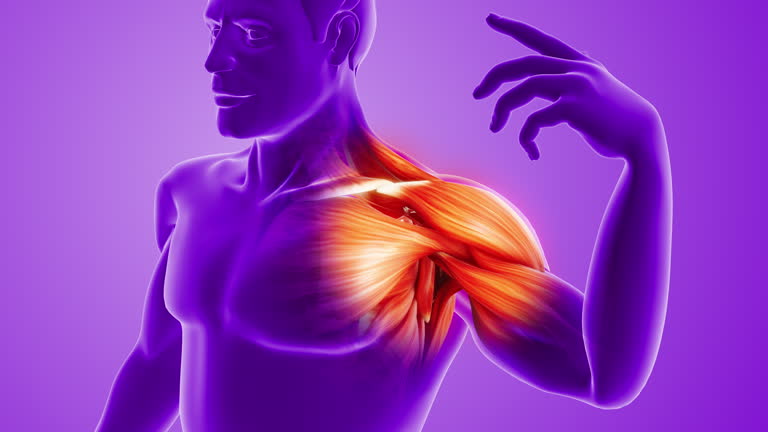
The primary challenge in treating the rotator cuff is the poor blood supply to the tendons, particularly in the "critical zone" near the bone attachment. When an athlete suffers a partial tear, the body’s natural repair mechanisms are often overwhelmed by the sheer mechanical demand placed on the shoulder. Traditional physical therapy can strengthen the surrounding muscles, but it cannot always bridge the gap in the damaged tendon fibers themselves. This physiological "dead zone" is why many shoulder injuries linger for months, eventually transitioning from acute inflammation to a chronic, degenerative state known as tendinosis.
Regenerative injections address this biological bottleneck by introducing help exactly where the body’s circulatory system fails to reach. By delivering a concentrated dose of growth factors or signaling cells directly into the tear site under ultrasound guidance, clinicians can jumpstart the healing process. This biological "boost" encourages the formation of high-quality, organized collagen rather than the weak, disorganized scar tissue that typically fills the void. For an athlete, this distinction is vital; organized collagen is what provides the primary factor in long-term shoulder stability and explosive power.
PRP: The Standard for Partial-Thickness Tears
Platelet-Rich Plasma (PRP) has moved from an experimental "extra" to a primary treatment for athletes with partial-thickness rotator cuff tears. A landmark 2026 randomized controlled trial provided some of the most compelling evidence to date, showing that athletes who received PRP injections in addition to physical therapy saw a two-thirds reduction in tear volume on MRI, whereas those who did physical therapy alone actually saw their tears slightly increase in size over time. This highlights a sobering reality: rest and exercise are sometimes not enough to overcome the degenerative pull of a high-use injury.
For an athlete, the value of PRP lies in its ability to facilitate "structural" healing. While physical therapy helps the shoulder move better by improving biomechanics, PRP helps the tendon be better by thickening the actual tissue. By reducing pain and improving the structural integrity of the tendon, PRP often allows athletes to progress through their throwing or loading programs significantly faster. This allows them to avoid the surgical table entirely for injuries that previously would have required a "cleanup" or debridement procedure just to provide a temporary window of relief.
MSCs and the Reduction of Surgical Re-Tears
In cases where surgery is unavoidable, regenerative medicine is still playing a critical role in reducing the need for future surgeries. One of the greatest frustrations in sports medicine is the "re-tear," where the surgically repaired tendon fails to stay attached to the bone during the high-tension phases of rehabilitation. Historically, the mechanical fix (the suture) was stronger than the biological fix (the healing tissue), leading to failure at the interface.
Recent clinical data involving bone marrow-derived MSCs have shown that augmenting a surgical repair with stem cells can significantly improve the quality of this tendon-to-bone interface. In a ten-year follow-up study, patients who received stem cell augmentation during their initial repair had an 87% survival rate of the tendon, compared to just 44% in those who had surgery alone. For a professional athlete, this biological reinforcement is the difference between a one-time fix and a recurring nightmare of revision surgeries that can permanently diminish their performance ceiling.
The Rise of Non-Surgical "Orthobiologics"
The trend toward non-surgical care is driven by the refinement of "orthobiologics", biologically active substances used to improve the healing of musculoskeletal tissues. In 2026, many sports medicine clinics are utilizing micro-fragmented adipose tissue (MFAT) to treat chronic shoulder dysfunction. This procedure, often completed in a single day, involves harvesting a small amount of fat and injecting the nutrient-rich cellular matrix into the rotator cuff. This provides a scaffold-like support that is far more substantial than a simple liquid injection.
These treatments are particularly effective for addressing fatty infiltration, a condition where muscle tissue begins to turn into fat after a long-standing tear. Once this process begins, the muscle loses its contractility, making even a perfect surgical repair less effective. By addressing the health of the muscle and the tendon simultaneously, these regenerative approaches are expanding the group of athletes who can successfully return to high-level play. We are moving away from a world where we just "fix the rip" and toward one where we restore the entire biological environment of the shoulder.